
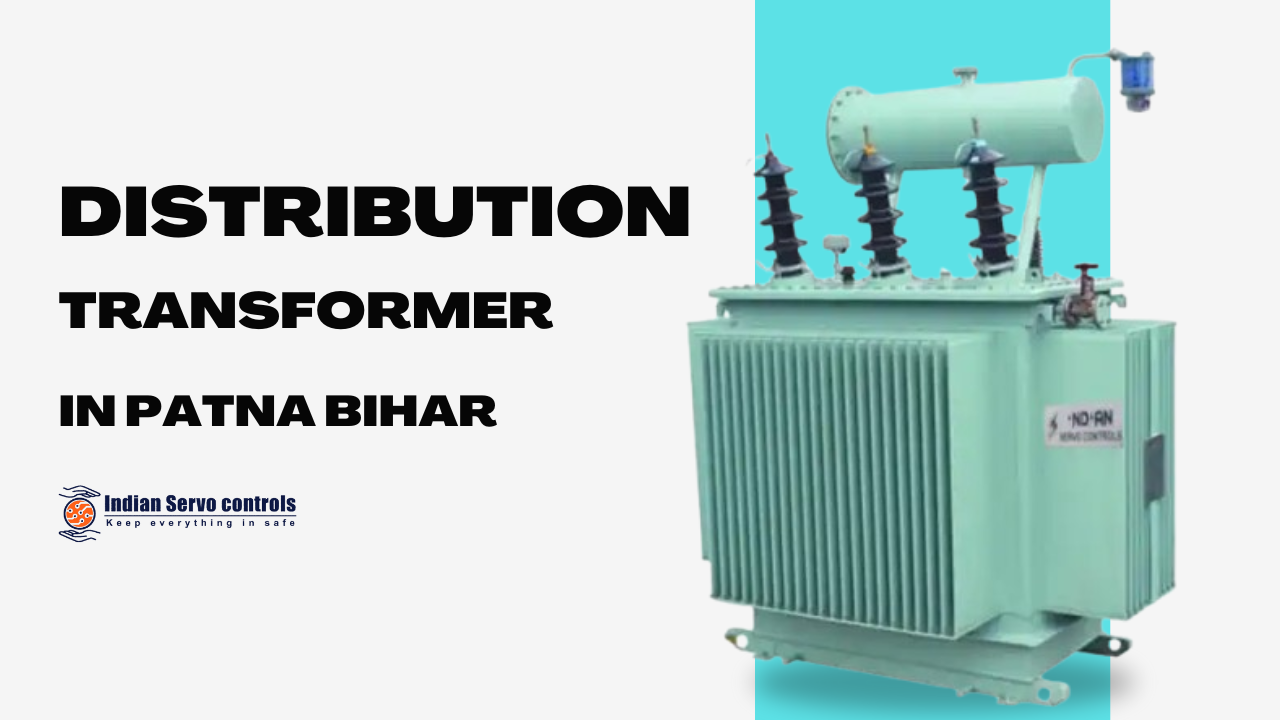
A Distribution Transformer is an electrical transformer designed to reduce higher distribution voltage to a lower voltage suitable for residential, commercial and industrial electrical systems.
Businesses looking for a Distribution Transformer in Patna Bihar should select the transformer according to required capacity, primary voltage, secondary voltage, connected load, installation conditions and application. Indian Servo Controls provides distribution transformer solutions for industrial and commercial power requirements.
Distribution transformers form an important part of electrical distribution networks and are commonly used where electrical power needs to be transformed to a suitable utilization voltage before being supplied to connected loads.
What Is a Distribution Transformer?
A distribution transformer transfers electrical energy from a primary distribution circuit to a lower-voltage secondary circuit. Depending on the electrical network and application, primary voltage levels may include 11 kV, 22 kV or 33 kV, while the required secondary voltage is selected according to the installation.
The transformer operates through electromagnetic induction between its primary and secondary windings. The turns ratio between these windings determines the transformation of voltage from the incoming supply to the required output.
How Does a Distribution Transformer Work?
When alternating current flows through the primary winding, it creates a changing magnetic flux in the transformer core. This magnetic flux induces voltage in the secondary winding.
The relationship between the primary and secondary winding turns allows the transformer to step down the incoming voltage to the required distribution voltage without a direct electrical connection between the two windings.
The final transformer specification should always be selected according to the actual electrical system, load and installation requirements.
Key Features of Distribution Transformers
- Voltage Transformation: Converts higher distribution voltage into a lower usable voltage.
- Continuous Operation: Designed for reliable operation within its specified loading and operating conditions.
- Different Capacity Options: Transformer capacity can be selected according to connected load and application.
- Multiple Voltage Classes: Configurations can be designed for different primary and secondary voltage requirements.
- Cooling Options: Transformer design may use oil-immersed or dry-type cooling depending on the application.
- Industrial Applications: Suitable configurations can support manufacturing plants, commercial facilities and electrical distribution systems.
Main Components of a Distribution Transformer
Transformer Core
The magnetic core provides the path through which magnetic flux passes between the primary and secondary windings. Laminated electrical steel is commonly used to reduce electrical losses.
Primary and Secondary Windings
The windings carry electrical current and enable voltage transformation through electromagnetic induction. Winding material and construction depend on transformer design and specification.
Transformer Tank
In an oil-immersed transformer, the main transformer assembly is housed inside a tank containing insulating and cooling oil.
Transformer Oil
Transformer oil in an oil-cooled system performs important insulation and heat-transfer functions. Its condition should be maintained according to the applicable maintenance requirements.
Bushings and Terminals
Bushings provide insulated connection points between the transformer windings and external electrical conductors.
Cooling Arrangement
Radiators or other cooling arrangements help dissipate heat generated during transformer operation.
Types of Distribution Transformers
Distribution transformers can be classified according to construction, installation and operating requirements.
Oil-Cooled Distribution Transformer
An oil-cooled transformer uses insulating oil for electrical insulation and heat dissipation. This configuration is commonly considered for outdoor and industrial applications where the selected transformer design and installation conditions permit it.
Dry-Type Distribution Transformer
A dry-type transformer uses air and solid insulation rather than insulating oil. These transformers may be considered for suitable indoor applications according to electrical, environmental and safety requirements.
Pole-Mounted Distribution Transformer
Pole-mounted transformers are installed on utility poles and are generally used for suitable distribution applications where their capacity, dimensions and network configuration allow pole installation.
Ground-Mounted Distribution Transformer
Ground-mounted transformer configurations are installed at ground level with appropriate electrical protection, clearances and installation arrangements.
Distribution Transformer Applications
Distribution transformers are used in a wide variety of electrical networks and installations, including:
- Industrial manufacturing facilities
- Commercial buildings
- Residential distribution networks
- Factories and production plants
- Hospitals and institutional facilities
- Schools and educational campuses
- Infrastructure projects
- Industrial electrical distribution systems
- Utility distribution networks
- Suitable renewable-energy installations
Distribution Transformer in Patna Bihar
Industrial and commercial facilities looking for a Distribution Transformer in Patna Bihar should evaluate the transformer according to the site’s electrical load, incoming supply, required secondary voltage, operating environment and future load requirements.
Indian Servo Controls provides transformer solutions that can be configured according to different industrial and commercial electrical requirements. The appropriate transformer should be finalized only after evaluating the technical requirements of the installation.
Indian Servo Controls Distribution Transformer
Indian Servo Controls provides oil-cooled distribution transformers for suitable industrial and electrical distribution applications.
- Rating: Up to 5 MVA
- Voltage Class: 11 kV / 22 kV / 33 kV with suitable secondary voltage configurations such as 433V
- Cooling: Oil Cooled
- Configuration: Off-Load and application-specific configurations
Final specifications depend on the customer’s electrical requirements, connected load and installation conditions.
OLTC Distribution Transformer
An OLTC Distribution Transformer uses an On-Load Tap Changer to allow transformer tap adjustment while the transformer is supplying the load. This configuration can be considered where voltage regulation requirements call for tap adjustment during operation.
Indian Servo Controls provides suitable OLTC transformer configurations with specifications including:
- Rating: Up to 5 MVA
- Voltage Class: 11 kV / 22 kV / 33 kV with suitable secondary voltage
- Cooling: Oil Cooled
- Tap Arrangement: On-Load configuration
Off-Load vs On-Load Tap Changer
Off-Load Tap Changer
An off-load tap arrangement requires the transformer to be appropriately isolated before the tap position is changed. It can be suitable where voltage adjustment is not required frequently during normal operation.
On-Load Tap Changer (OLTC)
An OLTC allows tap adjustment while the transformer remains in service, subject to the transformer design and operating requirements. It can be considered for applications where voltage regulation during operation is required.
Other Transformer Solutions from Indian Servo Controls
In addition to distribution transformers, Indian Servo Controls provides transformer solutions for different electrical and industrial applications.
Furnace Transformer
Furnace transformers are designed for suitable industrial furnace applications where the electrical load and operating requirements demand a specialized transformer configuration.
- Rating: Up to 3000 kVA
- Cooling: Oil Cooled
Solar Transformer
Solar transformer configurations can be used in suitable renewable-energy installations according to inverter output, voltage level, capacity and grid interconnection requirements.
- Rating: Up to 5 MVA
- Cooling: Oil Cooled
Power Transformer
Indian Servo Controls also provides power transformer solutions for suitable industrial and electrical power applications.
- Rating: Up to 5 MVA
- Voltage Class: 11 kV / 22 kV / 33 kV
- Cooling: Oil Cooled
- Options: On-Load and Off-Load configurations
How to Select a Distribution Transformer
Selecting the correct transformer requires more than choosing a kVA rating. The electrical and operating conditions of the installation should be evaluated before finalizing the transformer.
- Required Capacity: Determine the present connected load and expected future requirements.
- Primary Voltage: Confirm the incoming HT voltage available at the installation.
- Secondary Voltage: Determine the output voltage required by the electrical system.
- Load Characteristics: Consider the nature and operating pattern of the connected load.
- Cooling Type: Select an appropriate cooling arrangement according to capacity and installation conditions.
- Installation Environment: Consider indoor/outdoor installation, ambient temperature, ventilation and available space.
- Tap-Changing Requirement: Determine whether an off-load or on-load tap-changing arrangement is required.
- Applicable Standards: Ensure that the transformer specification meets applicable project and regulatory requirements.
How to Determine Transformer Capacity
The required transformer capacity depends primarily on the connected electrical load and operating conditions. Load calculations should consider the equipment that may operate simultaneously as well as applicable demand, starting and future-expansion requirements.
For industrial projects, transformer sizing should be based on a proper electrical load assessment rather than selecting capacity solely from a general online table.
11 kV, 22 kV and 33 kV Distribution Transformers
Distribution transformers can be designed for different primary voltage classes according to the electrical network supplying the facility.
11 kV Distribution Transformer
An 11 kV transformer may be used where the facility receives an 11 kV incoming electrical supply and requires transformation to a suitable lower distribution voltage.
22 kV Distribution Transformer
A 22 kV transformer can be considered for electrical networks and industrial installations operating with a 22 kV incoming supply.
33 kV Distribution Transformer
A 33 kV transformer may be required for suitable higher-voltage distribution networks and industrial installations according to the electrical system design.
The correct primary voltage class must match the actual incoming electrical supply and project requirements.
Benefits of a Properly Selected Distribution Transformer
- Provides the required voltage transformation for connected electrical loads.
- Supports reliable electrical distribution within the designed operating limits.
- Allows transformer capacity to be matched with application requirements.
- Supports industrial, commercial and utility distribution applications.
- Can be configured according to required voltage class and installation conditions.
- Provides options for different cooling and tap-changing requirements.
Distribution Transformer Maintenance
Routine transformer inspection and preventive maintenance can help identify abnormal conditions before they develop into larger operational problems. The exact maintenance schedule should follow the transformer manufacturer’s instructions, operating conditions and applicable electrical practices.
Depending on the transformer type and installation, maintenance may include:
- Checking transformer oil condition and oil level where applicable
- Inspecting bushings and terminals
- Checking for abnormal heating
- Inspecting for oil leakage
- Checking electrical connections
- Monitoring loading conditions
- Inspecting cooling components
- Checking protection and monitoring equipment
Distribution Transformer Standards in India
Transformer specifications for Indian projects should be evaluated against the applicable standards and regulatory requirements for the particular transformer type and project.
Relevant requirements may include applicable standards published by the Bureau of Indian Standards (BIS). Energy-efficiency requirements should also be checked against the regulations applicable to the specific transformer being supplied.
Why Choose Indian Servo Controls for Distribution Transformers?
Indian Servo Controls provides transformer and industrial power-control solutions based on customer electrical requirements. Instead of selecting a transformer only from a generic capacity chart, the system can be evaluated according to the actual application and site requirements.
Important parameters considered during transformer selection can include:
- Required transformer capacity
- Primary voltage
- Secondary voltage
- Connected load
- Application type
- Cooling requirement
- Tap-changing requirement
- Installation environment
Explore the available Indian Servo Controls transformer and power-control products for additional information.
Distribution Transformer in Patna Bihar – FAQs
What is a distribution transformer?
A distribution transformer is an electrical transformer that converts a higher distribution voltage into a lower voltage suitable for supplying connected electrical loads.
Where are distribution transformers used?
They are commonly used in industrial facilities, commercial buildings, residential distribution networks, infrastructure projects and utility power-distribution systems.
What primary voltage levels are used for distribution transformers?
Common distribution-system voltage classes can include 11 kV, 22 kV and 33 kV. The required voltage class depends on the incoming electrical supply and project specification.
What is an oil-cooled distribution transformer?
An oil-cooled transformer uses insulating oil for electrical insulation and heat dissipation. Cooling arrangements are designed according to the transformer capacity and operating requirements.
What is a dry-type transformer?
A dry-type transformer uses solid insulation and air-based cooling instead of transformer oil. It can be considered for suitable installations according to project and safety requirements.
What is an OLTC distribution transformer?
An OLTC distribution transformer includes an On-Load Tap Changer that allows tap adjustment while the transformer remains in service, according to its design and operating requirements.
How do I choose the correct distribution transformer capacity?
Transformer capacity should be selected according to connected load, demand characteristics, future load requirements, operating conditions and applicable engineering considerations.
What information is required before selecting a transformer?
Important information includes required kVA or MVA capacity, primary voltage, secondary voltage, load details, application, installation environment, cooling requirements and tap-changing requirements.
Does Indian Servo Controls provide distribution transformers for Patna Bihar?
Indian Servo Controls provides distribution transformer solutions for industrial and commercial requirements in Patna, Bihar. The final configuration can be selected according to the customer’s electrical and installation requirements.
Get a Distribution Transformer Solution in Patna Bihar
If you require a Distribution Transformer in Patna Bihar, share your electrical and project requirements with Indian Servo Controls so that an appropriate transformer configuration can be evaluated.
Provide details such as required capacity, primary voltage, secondary voltage, connected load, application, cooling preference and installation conditions when requesting a solution.
Contact Indian Servo Controls for more information about distribution transformers and industrial power-control solutions.
12 thoughts on “Distribution Transformer in Patna Bihar”
Comments are closed.