
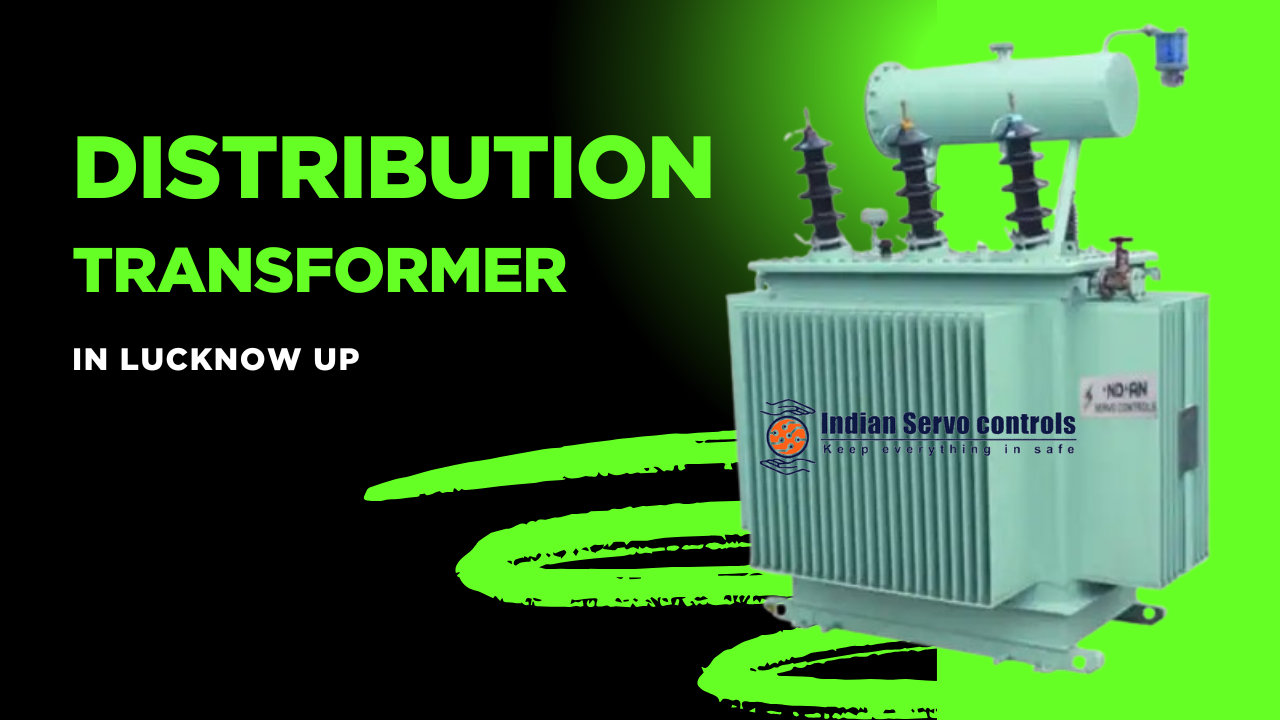
Distribution Transformer Manufacturers in Lucknow UP serve industrial, commercial, institutional, utility and infrastructure applications where electrical power needs to be transformed from a higher distribution voltage to a lower usable voltage. A distribution transformer is an important part of the electrical distribution network and is selected according to factors such as load, voltage class, phase configuration, installation environment and application requirements.
Indian Servo Controls provides distribution transformer solutions for different electrical applications. Customers looking for a distribution transformer in Lucknow should evaluate the actual electrical load, primary and secondary voltage requirements, cooling method, installation conditions and future load considerations before finalising a transformer configuration.
This guide explains how distribution transformers work, their main components, common types, applications and important selection factors for industrial and commercial requirements in Lucknow, Uttar Pradesh.
Distribution Transformer Manufacturers in Lucknow UP for Power Distribution
A distribution transformer performs the final voltage transformation required before electrical power is supplied to many end-use systems. It receives electricity at a higher distribution voltage and transforms it to a lower voltage suitable for the connected distribution network or load.
Distribution transformers are used across residential networks, commercial facilities, industrial sites, institutions and infrastructure projects. However, the transformer required for one application may be very different from another because electrical loads, voltage levels and installation conditions vary.
When evaluating Distribution Transformer Manufacturers in Lucknow UP, buyers should therefore provide accurate technical information instead of selecting a transformer only on the basis of its kVA rating.
For information about available electrical power solutions, visit Indian Servo Controls.
What Is a Distribution Transformer?
A distribution transformer is an electrical transformer used within a power distribution system to change electrical energy from one voltage level to another. In a typical step-down application, it reduces a higher primary distribution voltage to a lower secondary voltage required by the downstream electrical system.
The exact primary voltage, secondary voltage, capacity and transformer configuration depend on the electrical network and project requirements. Distribution transformers can be used in different voltage classes and capacities rather than having one universal specification.
The transformer operates through electromagnetic induction. Alternating current in the primary winding creates magnetic flux in the transformer core. This changing magnetic flux induces voltage in the secondary winding. The relationship between the primary and secondary windings determines the voltage transformation ratio.
How Does a Distribution Transformer Work?
A distribution transformer contains primary and secondary windings arranged around a magnetic core. When alternating voltage is applied to the primary winding, it produces alternating magnetic flux in the core.
The magnetic flux links with the secondary winding and induces voltage in it. By selecting the appropriate winding turns ratio, the transformer can provide the secondary voltage required by the electrical distribution system.
In a step-down distribution transformer, the secondary voltage is lower than the primary voltage. The transformer therefore allows electrical energy to be distributed at one voltage level and supplied to downstream systems at another.
Because transformer selection directly affects the electrical distribution system, voltage ratio, load characteristics, capacity and operating conditions should be evaluated before equipment is specified.
Main Components of a Distribution Transformer
Although construction varies according to transformer design, capacity and application, a distribution transformer generally includes several important components.
Transformer Core
The magnetic core provides a path for magnetic flux between the primary and secondary windings. Laminated electrical steel is commonly used in transformer-core construction to manage magnetic performance and losses.
Primary and Secondary Windings
The windings carry electrical current and provide the required voltage transformation. Conductors may be copper or aluminium depending on the transformer design and specification.
Insulation System
Electrical insulation separates energized components and supports safe operation at the transformer’s designed voltage levels. The insulation arrangement varies between liquid-immersed and dry-type transformer designs.
Transformer Tank
In an oil-immersed transformer, the active parts are housed within a tank containing insulating liquid. The tank forms part of the transformer’s mechanical structure and thermal-management arrangement.
Bushings and Terminals
Bushings provide insulated connection points through which electrical conductors enter or leave the transformer enclosure.
Cooling Arrangement
Heat generated during transformer operation must be dissipated. The cooling method depends on transformer construction, capacity and application.
Types of Distribution Transformers
Distribution transformers can be classified in several ways. Understanding these categories helps customers identify an appropriate solution for their electrical installation.
Oil-Immersed Distribution Transformer
An oil-immersed distribution transformer uses insulating liquid as part of its insulation and heat-transfer system. These transformers are widely used in electrical distribution applications, although the suitability of a particular design depends on installation and project requirements.
Dry-Type Distribution Transformer
A dry-type transformer does not use liquid as its primary insulation and cooling medium. Dry-type configurations can be considered where their construction and installation characteristics suit the project environment.
Pole-Mounted Distribution Transformer
Pole-mounted transformers are installed on supporting electrical poles and may be used in distribution networks where this arrangement is appropriate for the required capacity and network design.
Ground-Mounted Distribution Transformer
Ground-mounted transformers are installed at ground level on a suitable foundation or installation arrangement. Their enclosure, protection and site requirements depend on the particular transformer and project.
Single-Phase and Three-Phase Transformers
Distribution transformers can be designed for single-phase or three-phase electrical systems. The required configuration depends on the supply network and connected load.
Oil-Cooled vs Dry-Type Distribution Transformer
Cooling and insulation arrangements are important considerations when selecting a transformer.
Oil-Immersed Transformer
In an oil-immersed transformer, insulating liquid helps provide electrical insulation and transfer heat generated by the active parts. The exact cooling arrangement depends on the transformer design.
Dry-Type Transformer
Dry-type transformers use solid insulation systems and air-based heat dissipation rather than transformer oil as the main insulating medium.
Neither technology should be described as universally suitable for every installation. Capacity, location, ventilation, environmental conditions, electrical requirements, safety considerations and applicable standards should all be considered before selecting a transformer type.
Applications of Distribution Transformers in Lucknow UP
Distribution Transformer Manufacturers in Lucknow UP can receive requirements from a wide range of electrical installations. Typical applications may include:
- Industrial manufacturing facilities
- Commercial buildings
- Residential distribution networks
- Educational institutions
- Healthcare and institutional facilities
- Engineering and production units
- Warehouses and logistics facilities
- Infrastructure projects
- Agricultural and rural distribution systems
- Electrical substations and distribution networks
The transformer required for each application must be selected according to its actual electrical parameters rather than simply according to the industry in which it will operate.
Important Factors When Selecting a Distribution Transformer
Customers searching for Distribution Transformer Manufacturers in Lucknow UP should prepare the basic electrical specifications of their project before requesting a transformer quotation.
1. Required Transformer Capacity
The required transformer capacity should be calculated according to the connected load, demand characteristics and project requirements. Selecting capacity without considering the actual load can result in an unsuitable transformer specification.
2. Primary Voltage
The incoming voltage supplied to the transformer must be identified accurately. Distribution systems can operate at different primary voltage levels depending on the network and project.
3. Secondary Voltage
The required secondary voltage should correspond to the downstream electrical distribution system and connected equipment.
4. Single-Phase or Three-Phase Configuration
The transformer must be selected according to the phase configuration of the electrical network and load.
5. Load Characteristics
Industrial machinery, motors, electronic loads and other equipment can have different electrical characteristics. Understanding the nature of the load helps define the transformer requirement more accurately.
6. Installation Location
Available space, ventilation, ambient conditions, access, environmental exposure and installation arrangement should be evaluated when specifying a transformer.
7. Cooling and Insulation Type
Oil-immersed and dry-type transformers have different construction and installation characteristics. Selection should be based on the project’s technical and environmental requirements.
8. Applicable Standards and Project Specifications
The transformer should be specified according to standards, utility requirements and project specifications that actually apply to the installation. These requirements should be confirmed for the individual project rather than assumed.
Information to Provide Before Requesting a Distribution Transformer
Providing accurate electrical information helps a transformer manufacturer or supplier understand the requirement. Before requesting a quotation, it is useful to prepare:
- Required transformer capacity
- Primary/input voltage
- Secondary/output voltage
- Single-phase or three-phase requirement
- Type of connected load
- Installation location and environment
- Indoor or outdoor installation requirement
- Preferred transformer construction where specified
- Applicable project or utility specifications
- Any specific monitoring or protection requirements
If the final transformer capacity has not yet been determined, the connected-load information and electrical drawings should be reviewed by appropriately qualified electrical professionals before equipment selection.
Indian Servo Controls Distribution Transformer Solutions
Indian Servo Controls provides transformer and voltage-control solutions for industrial and electrical applications. The appropriate transformer configuration depends on the customer’s project specifications and operating requirements.
The existing Indian Servo Controls product information includes distribution transformers, OLTC distribution transformers, furnace transformers, solar transformers and power transformers. Customers should confirm the current technical specifications applicable to the particular product before placing an order.
You can explore available products through the Indian Servo Controls products section.
Distribution Transformer
A standard distribution transformer can be used where the application requires transformation between the specified primary and secondary distribution voltages. The final configuration should be selected according to capacity, voltage class, cooling arrangement and project requirements.
OLTC Distribution Transformer
An OLTC distribution transformer incorporates an on-load tap-changing arrangement where that functionality is required by the system design. The exact operating range and configuration depend on the transformer specification.
Furnace Transformer
Furnace transformers are intended for specialized furnace-related electrical applications and have operating requirements different from conventional distribution loads.
For additional information, visit the Furnace Transformer page.
Solar Transformer
Transformer requirements associated with solar power installations depend on system voltage, inverter configuration, plant architecture and grid-interconnection requirements.
Learn more through the Solar Transformer section.
Power Transformer
Power transformers are used for applications requiring electrical power transformation according to the voltage, capacity and system requirements of the project.
Visit the Power Transformer page for related product information.
Distribution Transformer vs Power Transformer
Distribution transformers and power transformers both transfer electrical energy between voltage levels, but their applications within an electrical system can differ.
A distribution transformer is generally associated with the distribution stage of an electrical network, where power is transformed to a voltage appropriate for downstream distribution or utilization.
A power transformer may be applied at other stages of a power system depending on voltage, capacity and network requirements.
Rather than choosing between them based only on terminology, buyers should identify the required capacity, voltage ratio, network position, duty and applicable project specifications.
Transformer Losses and Efficiency Considerations
Transformers experience electrical losses during operation. Core losses are associated with magnetic activity in the transformer core, while winding losses are related primarily to current flowing through the conductors.
Actual transformer performance depends on its design, loading conditions, materials and operating environment. For projects where energy performance is important, the applicable efficiency and loss requirements should be included in the technical specification.
Customers should avoid assuming a particular efficiency level or energy rating unless it is supported by the documentation for the specific transformer being supplied.
Distribution Transformer Installation Considerations
Correct transformer selection is only one part of a reliable electrical installation. Site planning and installation conditions also require careful attention.
Important considerations can include:
- Foundation and equipment placement
- Electrical clearances
- Earthing arrangements
- Cable routing and termination
- Ventilation and heat dissipation
- Environmental exposure
- Access for inspection and maintenance
- Protection coordination
- Applicable electrical and fire-safety requirements
Transformer installation and commissioning should be performed by appropriately qualified professionals according to the equipment documentation, applicable standards and project requirements.
Distribution Transformer Maintenance
Maintenance requirements vary according to transformer type, design, loading and operating environment. Instead of following a universal maintenance interval, the inspection schedule should be based on manufacturer guidance, site conditions and the maintenance practices applicable to the electrical installation.
Typical inspection areas may include:
- General physical condition
- Electrical connections and terminals
- Signs of abnormal heating
- Unusual noise or vibration
- Condition of bushings
- Cooling surfaces and ventilation
- Oil condition or leakage where applicable
- Earthing connections
- Associated protection equipment
Testing or servicing should be carried out by qualified personnel using procedures appropriate to the transformer and electrical installation.
Standards and Official Technical References
Transformer requirements in India can depend on product type, application, utility specifications and applicable regulations. Buyers should confirm the standards that apply to their specific project instead of assuming that every transformer is subject to exactly the same specification.
The Bureau of Indian Standards (BIS) provides information about Indian Standards and conformity-assessment activities. Relevant standards should be identified according to the particular transformer and project requirement.
For information relating to India’s electricity sector and applicable technical regulations, users can also refer to the Central Electricity Authority (CEA).
Any requirement for a particular standard, certification, efficiency level or test should be confirmed in the project specification and supported by documentation applicable to the transformer being supplied.
Why Choose the Correct Distribution Transformer for Your Project?
A distribution transformer is a long-term component of an electrical system, so correct technical selection is important. An unsuitable voltage ratio, capacity, phase arrangement or installation configuration can create operational difficulties and may require later changes to the electrical system.
Before finalising a transformer, review:
- Current connected load
- Expected demand
- Primary and secondary voltage
- Phase configuration
- Load characteristics
- Installation conditions
- Project and utility requirements
- Protection and monitoring requirements
These details provide a stronger technical basis for selecting a transformer than relying only on a generic capacity or application description.
Distribution Transformer Manufacturers in Lucknow UP – Discuss Your Requirement
If you are searching for Distribution Transformer Manufacturers in Lucknow UP for an industrial, commercial, institutional, infrastructure or electrical distribution project, begin by defining the technical requirements of the installation.
Share details such as required capacity, primary voltage, secondary voltage, phase configuration, connected load, transformer type and installation environment with Indian Servo Controls. This information can be used to discuss an appropriate transformer configuration for the project.
For more information about distribution transformers and related electrical solutions, visit Indian Servo Controls or explore the transformer products section.
Frequently Asked Questions About Distribution Transformers in Lucknow UP
What is a distribution transformer?
A distribution transformer is an electrical transformer used to change voltage within a power distribution system. In a typical step-down application, it converts a higher distribution voltage to a lower voltage required by the downstream network or connected electrical system.
Where are distribution transformers used?
Distribution transformers can be used in residential distribution networks, industrial facilities, commercial buildings, institutions, infrastructure projects and other electrical distribution applications.
What information is required to select a distribution transformer?
Important information includes required capacity, primary voltage, secondary voltage, phase configuration, connected load, installation conditions, transformer type and applicable project or utility specifications.
What is the difference between oil-immersed and dry-type distribution transformers?
Oil-immersed transformers use insulating liquid as part of their insulation and thermal-management system. Dry-type transformers use solid insulation systems and air-based cooling. Selection depends on the project and installation requirements.
Can distribution transformers be used for industrial applications?
Yes. Distribution transformers are used in many industrial electrical systems. The appropriate transformer must be selected according to the facility’s load, voltage levels, phase configuration and operating requirements.
How do I request a distribution transformer for a project in Lucknow?
Prepare the project’s electrical details, including capacity or connected load, primary and secondary voltage, phase configuration, application and installation environment. These details can then be shared with Indian Servo Controls to discuss the required transformer configuration.
13 thoughts on “Distribution Transformer in Lucknow UP”
Comments are closed.