
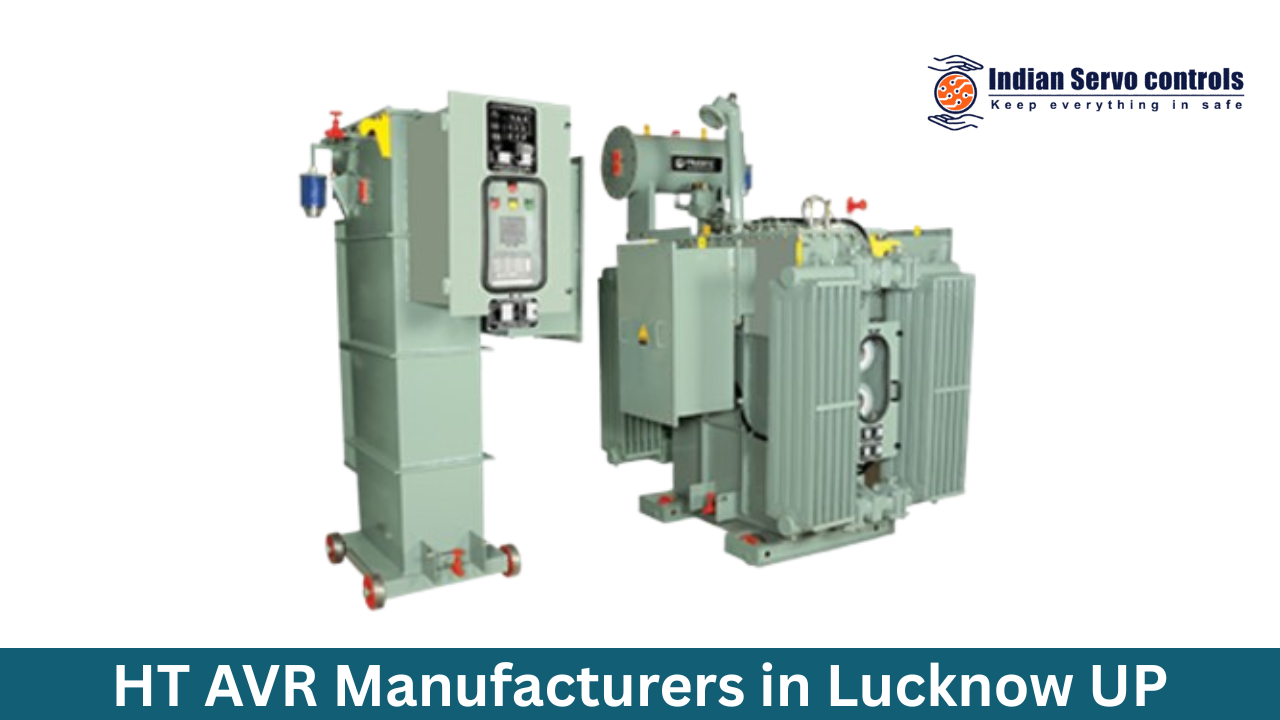
HT AVR Manufacturers provide high-tension automatic voltage regulation solutions for industrial and commercial electrical systems where incoming voltage fluctuations can affect downstream equipment and operations. An HT AVR (High Tension Automatic Voltage Regulator) is designed to regulate voltage on the high-voltage side of an electrical system according to the required input range, output voltage, load capacity and system configuration.
For businesses searching for HT AVR Manufacturers in Lucknow UP, selecting the right system requires more than choosing a kVA rating. The incoming voltage range, required output voltage, connected load, transformer configuration, installation environment and control method should all be evaluated before finalising an HT AVR.
Indian Servo Controls provides voltage regulation and electrical power solutions for industrial applications. This guide explains HT AVR working principles, common configurations, applications, selection factors and the information buyers should prepare before requesting a system.
HT AVR Manufacturers for Industrial Voltage Regulation
An HT AVR is used where voltage regulation is required on the high-tension side of an electrical distribution system. Its purpose is to compensate for variations in incoming voltage so that the downstream electrical system receives voltage within the range specified for the application.
Voltage conditions can vary because of distribution-network conditions, changing loads and other electrical factors. Where these variations are significant, they can influence the operating conditions of connected transformers, motors, machinery and other electrical equipment.
Customers evaluating HT AVR Manufacturers should therefore begin with the actual electrical characteristics of their site rather than selecting equipment solely from a standard product description.
For information about available electrical solutions, visit Indian Servo Controls.
What Is an HT AVR?
HT AVR stands for High Tension Automatic Voltage Regulator. It is an electrical voltage-regulation system intended for high-voltage applications where the incoming supply can vary and controlled voltage is required for the downstream electrical network.
The exact meaning of “HT” and the voltage class applicable to a particular installation should be determined from the electrical system, utility supply and project specification rather than assumed from a single universal voltage threshold.
An HT AVR monitors voltage conditions and uses an appropriate regulating arrangement to correct variations according to the system design. Different equipment designs can use different regulation mechanisms, so the operating principle and technical specification should always be confirmed for the particular system being supplied.
How Does an HT AVR Work?
An HT AVR continuously monitors electrical voltage and responds when the incoming voltage moves outside the required operating range. The regulating mechanism then makes the necessary adjustment according to the equipment design.
A typical voltage-regulation process can be understood in four stages:
- Voltage sensing: The system measures the relevant incoming or regulated voltage.
- Comparison: The control system compares the measured value with the required operating value or range.
- Correction: The regulating mechanism changes the voltage according to the system design.
- Continuous monitoring: Voltage is monitored continuously so additional corrections can be made when supply conditions change.
The actual response method, correction range and control arrangement depend on the specific HT AVR design.
Why Are HT AVR Systems Used?
Industrial electrical installations can experience variations in incoming supply voltage. The importance of those variations depends on their magnitude, duration and the electrical characteristics of the connected load.
An appropriately engineered HT AVR can be considered where controlled voltage is required before power is supplied to downstream electrical equipment.
Potential objectives of an HT AVR installation may include:
- Regulating variations in incoming supply voltage
- Providing controlled voltage to downstream electrical systems
- Supporting electrical equipment that requires defined voltage conditions
- Managing high-side voltage variation in an industrial power-distribution arrangement
- Supporting stable operating conditions within the designed regulation range
The actual benefits depend on site conditions and the correctly specified equipment. An HT AVR should not be assumed to solve unrelated power-quality problems without proper electrical analysis.
Applications of HT AVR Systems
HT AVR Manufacturers in Lucknow UP may receive requirements from different industrial and commercial sectors. The suitability of an HT AVR depends on the electrical distribution architecture and voltage conditions at the site.
Potential applications include:
- Manufacturing facilities
- Engineering plants
- Process industries
- Large commercial facilities
- Institutional electrical systems
- Industrial production units
- Warehouses and logistics facilities
- Electrical distribution installations
- Infrastructure facilities
- Sites operating substantial motor and machinery loads
The presence of an industrial load does not automatically mean that an HT AVR is required. Voltage measurements, electrical-system design and operating requirements should be assessed before equipment is selected.
Common HT AVR Configurations
Voltage-regulation equipment can use different technologies and configurations. Instead of treating every voltage regulator as the same product, buyers should understand the specific regulation mechanism offered for their application.
Servo-Controlled Voltage Regulation
A servo-controlled system uses an electromechanical regulating arrangement controlled according to sensed voltage conditions. The exact construction and response characteristics depend on the equipment design.
Tap-Changing Voltage Regulation
Tap-changing systems regulate voltage by changing the effective transformer turns ratio through available tap positions. Where on-load tap-changing equipment is used, adjustments can be made according to the equipment design without a normal load interruption for each regulating operation.
Static Voltage Regulation
Static voltage-regulation systems use power-electronic components rather than relying solely on electromechanical regulating mechanisms. Their suitability depends on voltage class, load characteristics, response requirements and the system architecture.
These technologies should not be considered interchangeable without technical evaluation. Each project should be specified according to its electrical requirements.
HT AVR and OLTC-Based Voltage Regulation
An on-load tap changer, commonly abbreviated as OLTC, is a mechanism that changes transformer tap positions while the transformer remains energized and supplying its load, subject to the design and operating limitations of the equipment.
OLTC-based arrangements can be used where voltage regulation through transformer tap changes is appropriate. The number of tap positions, voltage range, control logic and switching arrangement depend on the equipment specification.
When comparing HT AVR Manufacturers, customers should ask which regulation technology is being proposed and how that technology corresponds to the site’s incoming voltage range and load requirements.
Oil-Cooled and Dry-Type Voltage Regulation Systems
Cooling and insulation arrangements depend on the construction of the electrical equipment included in the HT AVR system.
Oil-Immersed Systems
Oil-immersed electrical equipment uses insulating liquid as part of its insulation and heat-transfer arrangement. The design can be suitable for various industrial applications depending on capacity, voltage class, installation environment and project requirements.
Dry-Type Systems
Dry-type equipment uses solid insulation and air-based cooling arrangements rather than transformer oil as the primary insulating medium.
Neither construction should automatically be considered preferable for every application. Installation environment, voltage, capacity, ventilation, safety requirements and project specifications should be evaluated before selecting the equipment.
HT AVR vs LT AVR
The primary difference between HT and LT voltage-regulation systems is the part of the electrical network where voltage regulation takes place.
An HT AVR is intended for voltage regulation on the high-tension side of the electrical system. An LT AVR operates on the low-voltage side.
The appropriate arrangement depends on factors including:
- Incoming supply voltage
- Distribution-transformer arrangement
- Connected load
- Required voltage regulation
- Electrical distribution architecture
- Site constraints
- Project specifications
The decision should be based on electrical-system analysis rather than assuming that either HT or LT regulation is inherently better.
Important Factors When Choosing HT AVR Manufacturers
Choosing among HT AVR Manufacturers should be based on the manufacturer’s ability to understand and address the actual electrical requirement. Customers should provide detailed technical information and review the proposed specification carefully.
1. Incoming Voltage Range
The minimum, normal and maximum incoming voltage conditions are among the most important parameters for an AVR system. Actual site measurements can provide valuable information when voltage fluctuations are the reason for considering regulation equipment.
2. Required Output Voltage
The required regulated output should correspond to the electrical-system design and downstream equipment.
3. Load Capacity
The connected load and expected operating demand should be assessed when specifying equipment capacity. Future expansion may also need consideration where it forms part of the project plan.
4. Load Characteristics
Motors, furnaces, production machinery, electronic equipment and other industrial loads can have different electrical characteristics. These characteristics can affect the required system specification.
5. Regulation Technology
Customers should understand whether the proposed equipment uses servo regulation, tap-changing technology, static regulation or another engineering arrangement.
6. Installation Environment
Indoor or outdoor installation, ambient conditions, available space, ventilation, access and environmental exposure can influence equipment selection.
7. Protection and Monitoring Requirements
The protection, metering, alarms and monitoring required for a project should be clearly defined in the specification. Features should not be assumed to be standard unless confirmed for the specific equipment.
8. Applicable Standards
Any applicable electrical standards, utility requirements and project-specific specifications should be identified before procurement.
Information to Provide Before Requesting an HT AVR
Customers searching for HT AVR Manufacturers in Lucknow UP can improve the technical discussion by preparing relevant electrical information before requesting a quotation.
Useful information may include:
- Incoming voltage and voltage class
- Measured minimum and maximum input voltage
- Required regulated voltage
- Connected load or required capacity
- Three-phase system details
- Type of industrial load
- Transformer details where relevant
- Existing electrical single-line diagram where available
- Indoor or outdoor installation
- Ambient and site conditions
- Required monitoring and protection functions
- Applicable project specifications
If these parameters have not yet been established, the electrical system should be assessed by appropriately qualified professionals before equipment is finalised.
Indian Servo Controls HT AVR Solutions
Indian Servo Controls provides electrical power-control solutions that include HT AVR and servo voltage-stabilization equipment. The appropriate configuration depends on the customer’s incoming voltage conditions, capacity, load and installation requirements.
The company’s existing product information identifies an HT AVR (Servo Stabilizer) as an oil-cooled product category with ratings stated up to 3 MVA. Because specifications can vary by requirement and may change over time, customers should confirm the current specification directly before procurement.
You can explore related electrical products through the Indian Servo Controls products section.
Related Indian Servo Controls Power Products
Voltage regulation is only one part of an industrial electrical distribution system. Depending on the project, related transformer and voltage-control equipment may also be relevant.
Distribution Transformer
A distribution transformer changes voltage between the required primary and secondary distribution levels. Transformer capacity and configuration should be selected according to the actual load and system requirements.
OLTC Distribution Transformer
An OLTC distribution transformer incorporates on-load tap-changing functionality where voltage adjustment through transformer taps is required by the electrical design.
Furnace Transformer
Furnace transformers are intended for specialized furnace-related electrical loads. Their design requirements can differ significantly from ordinary distribution applications.
Learn more from the Furnace Transformer page.
Solar Transformer
Solar power installations may require transformers selected according to inverter output, system voltage, plant architecture and grid-interconnection requirements.
Visit the Solar Transformer page for related information.
Power Transformer
Power transformers are used for electrical energy transformation according to the voltage, capacity and network requirements of the installation.
Explore the Power Transformer section.
Servo Voltage Stabilizer
Servo voltage stabilizers provide voltage regulation for applications where this technology and voltage level are appropriate for the connected electrical system.
More information is available on the Servo Stabilizer page.
Why Site Voltage Data Matters Before Selecting an HT AVR
One of the most important steps before selecting an HT AVR is understanding the actual voltage behaviour at the installation.
If equipment is selected using only the nominal supply voltage, the proposed regulating range may not correspond to real operating conditions. Recording voltage at relevant times and under different load conditions can help establish the range that needs to be considered.
Important observations can include:
- Nominal incoming voltage
- Lowest observed voltage
- Highest observed voltage
- Time and duration of significant variations
- Load conditions during the variation
- Existing transformer and distribution-system details
This information can support a more technically appropriate discussion with an HT AVR manufacturer or electrical consultant.
Protection and Monitoring in HT AVR Systems
Protection requirements depend on the equipment and electrical-system design. Depending on the project specification, an HT AVR installation may interact with switchgear, protective devices, metering and control equipment.
Customers should define the required functions during technical discussions instead of assuming that every HT AVR automatically includes a particular protection or remote-monitoring package.
Requirements that may need discussion include:
- Voltage indication and metering
- Current measurement
- System status indication
- Alarm requirements
- Protection coordination
- Manual or automatic operating modes
- Communication or remote-monitoring requirements where needed
The actual features should be documented in the final technical specification.
HT AVR Installation and Commissioning Considerations
High-voltage electrical equipment requires appropriate engineering, installation and safety procedures. Installation conditions should therefore be considered during equipment selection rather than after the system has already been manufactured.
Project considerations may include:
- Equipment foundation and placement
- Electrical clearances
- Earthing arrangements
- HT cable routing and termination
- Access for inspection and maintenance
- Ventilation and heat dissipation
- Environmental protection
- Coordination with existing transformer and switchgear
- Testing and commissioning requirements
Installation, testing and commissioning of HT equipment should be performed by appropriately qualified personnel according to the equipment documentation, project requirements and applicable electrical rules.
HT AVR Maintenance Considerations
Maintenance requirements depend on the regulating technology, equipment construction, operating environment and manufacturer’s instructions. There is no single maintenance interval that can accurately apply to every HT AVR system.
Typical inspection areas may include:
- General equipment condition
- Electrical connections
- Signs of abnormal heating
- Condition of bushings and terminals
- Cooling arrangement
- Oil condition or leakage where applicable
- Control-system operation
- Metering and indication
- Earthing connections
- Associated protection equipment
The maintenance programme should follow the documentation and procedures applicable to the specific installed equipment.
Standards and Official Electrical References
The standards and regulatory requirements applicable to an HT AVR installation depend on the equipment configuration, voltage class, project and electrical network. Buyers should therefore identify the requirements that specifically apply to their installation instead of assuming that a particular certification automatically applies to every HT AVR.
The Bureau of Indian Standards (BIS) provides official information about Indian Standards and conformity-assessment activities. Relevant standards should be identified according to the equipment and project.
The Central Electricity Authority (CEA) is another official source for information relating to India’s electricity sector and applicable technical regulations.
Any required standard, test, certification or compliance document should be confirmed as part of the project’s technical specification.
Questions to Ask Before Finalising an HT AVR
When comparing proposals from HT AVR Manufacturers, customers can ask technical questions such as:
- What input-voltage range has the system been designed for?
- What regulated output is proposed?
- What regulation technology is being used?
- How has equipment capacity been selected?
- What cooling and insulation arrangement is proposed?
- What protection and monitoring functions are included?
- What site information is required before manufacturing?
- What installation conditions must be maintained?
- What testing documentation applies to the supplied equipment?
- What maintenance requirements apply to the proposed system?
These questions help keep the procurement process focused on the actual technical solution rather than marketing claims.
HT AVR Manufacturers in Lucknow UP – Discuss Your Requirement
If you are searching for HT AVR Manufacturers in Lucknow UP for an industrial or commercial electrical system, start by identifying the site’s incoming voltage conditions and connected load requirements.
Share the input-voltage range, required regulated voltage, capacity, load type, transformer details, installation environment and other relevant project specifications with Indian Servo Controls. These details provide a technical basis for discussing a suitable HT AVR configuration.
For more information about HT AVR, transformers, servo stabilizers and related power-control equipment, visit Indian Servo Controls or explore the electrical products section.
Frequently Asked Questions About HT AVR Manufacturers
What is an HT AVR?
An HT AVR is a High Tension Automatic Voltage Regulator used to regulate voltage on the high-voltage side of an electrical system. Its exact configuration depends on the incoming voltage, required output, load and system design.
Where is an HT AVR used?
HT AVR systems may be used in industrial plants, manufacturing facilities, commercial installations and other electrical systems where high-side voltage regulation is technically required.
What is the difference between HT AVR and LT AVR?
An HT AVR regulates voltage on the high-tension side of an electrical system, while an LT AVR operates on the low-voltage side. The appropriate solution depends on the electrical distribution architecture and project requirements.
What details should I provide to an HT AVR manufacturer?
Provide the incoming voltage, minimum and maximum voltage conditions, required output voltage, connected load or capacity, load type, transformer details, installation environment and applicable project requirements.
Can an HT AVR be customized for different industrial loads?
HT AVR specifications can be engineered according to project requirements, but available configurations depend on the manufacturer’s equipment design. The required load, voltage conditions and operating environment should be discussed before the system is finalised.
How should I select an HT AVR manufacturer in Lucknow UP?
Compare manufacturers using the proposed technical specification, regulation method, input range, output requirement, equipment capacity, protection requirements, applicable documentation and suitability for your site’s electrical system rather than relying on unsupported rankings or marketing claims.
10 thoughts on “HT AVR Manufacturers in Lucknow UP”
Comments are closed.